How To Insert An Ivc Filter
The usual treatment for deep vein thrombosis and pulmonary embolism is drug treatment to thin the blood with medication such as Warfarin. The filter is inserted through a long tube into the IVC and its correct position will be confirmed with X-rays.

Understanding Inferior Vena Cava Ivc Filter Placement
By putting the filter in it makes intuitive sense that it would prevent a pulmonary embolism from happening Between 2005 and 2013 138049 patients with a principal discharge of proximal or caval DVT were identified in the NIS database.
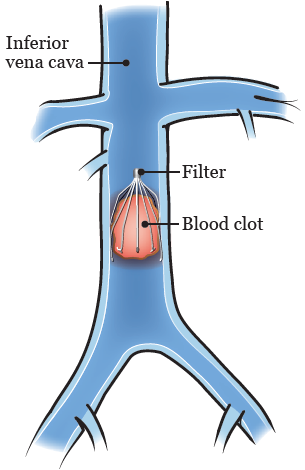
How to insert an ivc filter. Afterwards we remove the tubes and press on your neck for a couple of minutes to prevent any bleeding. The procedure takes on average between 30-45 minutes to perform. Your healthcare provider will insert a catheter thin plastic tube into a blood vessel in your neck or groin.
2 In the 1930s the connection between deep vein thrombosis DVT and pulmonary embolism PE was reported by John Homans and femoral vein ligation was suggested as treatment and prevention of fatal VTE events. The catheter is pulled out and the filter is left in. You will then be taken back to the ward on a trolley where you may be asked to sit up for 1.
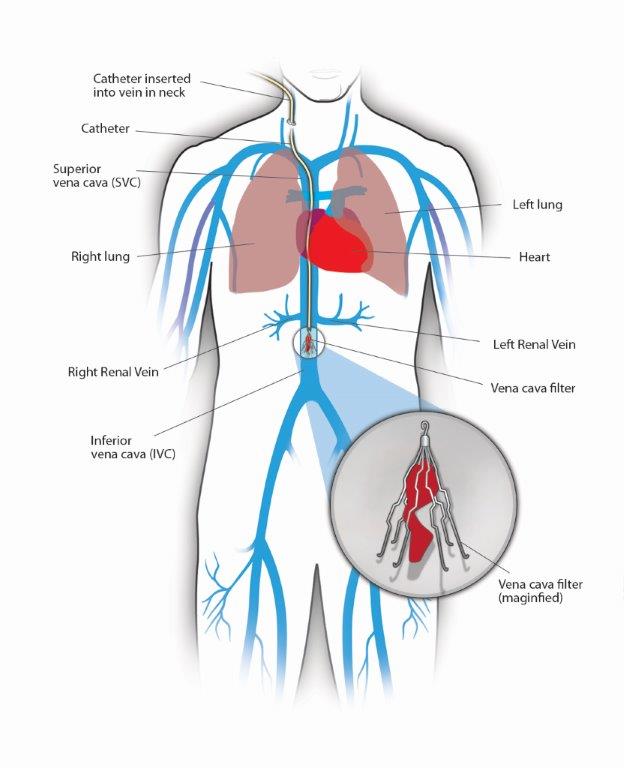
What happens during IVC filter placement. To place the filter a catheter is guided into the IVC using fluoroscopic guidance then the filter is pushed through the catheter and deployed into the desired location usually just below the junction of the IVC and the lowest renal vein. Patient Information Inferior Vena Cava IVC filter insertion and removal wwwuhcwnhsuk - 4 - The catheter is then inserted into the vein at the groin or neck and using X-rays to help the.
The filter is left in place and the catheter is removed. Filters are typically placed by a radiolo-gist or vascular surgeon or cardiologist through a vein in either the neck or the groin and then deployed via a cath-. The catheter is then gently moved into your IVC.
He will use an ultrasound or x-ray to guide the catheter into your IVC. It may be left in place permanently. Even stable patients with early recurrent pulmonary embolism showed a decreased mortality with IVC filters even though in other circumstances IVC filters do not reduce mortality in stable patients.
He or she will use an ultrasound or x-ray to guide the catheter to your IVC filter. Clot to allow safe filter insertion then the filter is placed in this position through a further small tube. Your healthcare provider will press firmly on the area.
The skin around your insertion site your neck or groin will be cleaned and covered with a drape. In the United States usual practice was to insert an IVC filter in patients with early recurrent pulmonary embolism. An Inferior Vena Cava Filter is a small metal device that is used to catch blood clots.
In a few patients Warfarin does not prevent further pulmonary embolisms and in others thinning the blood is. Your interventional radiologist will place the IVC filter through a small incision surgical cut made in your insertion site. Using fluoroscopy X-ray guidance the snare is used to latch onto the small hook and once attached to withdraw the filter.
Better term is IVC filter. Filters can be nonremovable and thus are permanent or they can be removable and thus can be left in for only a few weeks or months. Inserting the vena cava filter.
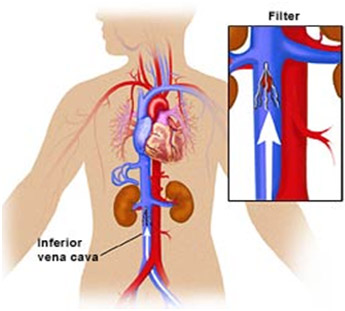
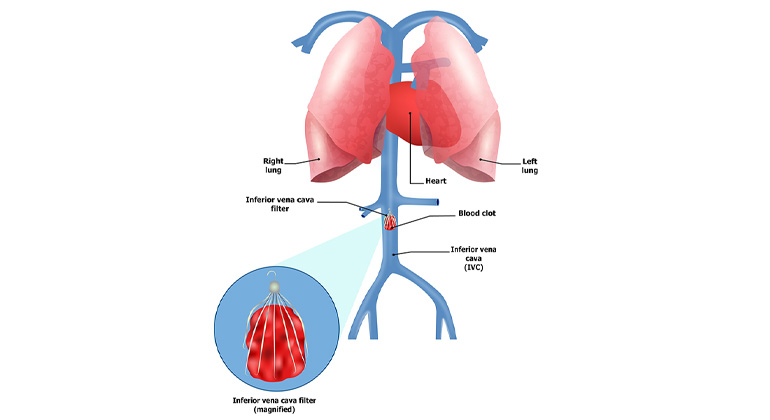
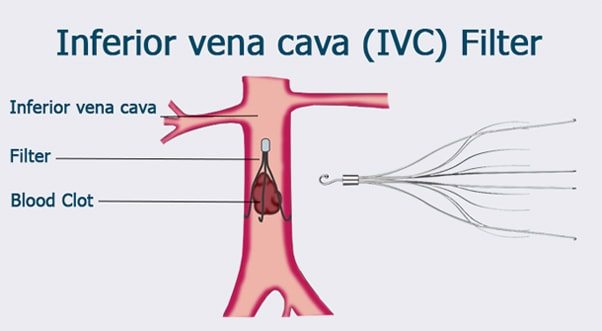
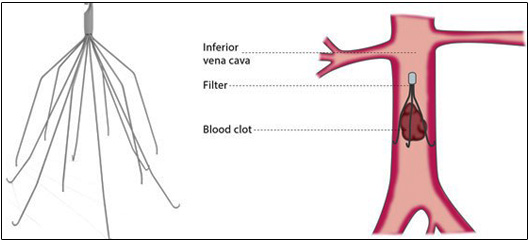
The filter is placed in the inferior vena cava the large. Use of a physical barrier to prevent thrombus migration was first proposed in 1865 by Armand Trousseau. The catheter carrying a collapsed filter is sent through a blood vessel to the inferior vena cava.
A thin flexible tube catheter is inserted into this vein. How long does the procedure take. You may still feel some pressure sensation but if you feel any pain during the procedure inform the radiologist.
A filter placed in your IVC assists in stopping any blood clots travelling from your legs or pelvis to your lungs. A special device called a snare is inserted into the jugular vein the large vein in the neck. To place an IVC filter an interventionalist makes a small incision through the neck or groin and moves a thin flexible tube known as a catheter through a vein.
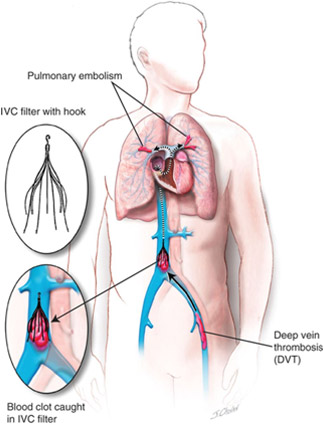
The filter then expands and attaches itself to the walls of the IVC. Most removable IVC filters have a small hook at one end. Additional cohort studies would.
An IVC filter is a small metal device placed into the IVC which prevents a large pulmonary embolism by trapping a clot before it reaches the lungs. The Inferior Vena Cava IVC is the main blood vessel in your abdomen that carries blood from your legs back to your heart. An IVC filter is a small metal device about an inch long shaped rather like the spokes of an umbrella.
Of these 7119 patients underwent catheter-directed thrombolysis and 2421 34 received an IVC filter. The hook at the tip of the catheter will attach to the filter and remove it from the walls of your IVC. Your healthcare provider will insert a catheter thin plastic tube into a blood vessel in your neck or groin.
Mortality was lower in those who received an IVC filter. Then the tube is removed and the filter left in place. Insert the filter to freeze the area.
The IVC filter is placed through a small incision in a vein in your groin or neck. The filter will be pushed through the catheter and attached to the walls of the IVC. Use of catheter-directed thrombolysis for DVT.
The filter is inserted into your IVC by placing a needle and thin plastic tube catheter into a. If you have not received an appointment for removal please contact the Radiology Department at the hospital where you had the initial procedure or talk to your doctor. A collapsed IVC filter is sent with the catheter.
Youll get an injection shot to numb the site. How Is an IVC Filter Placed. You will be asked to lie as still as you can.
An appointment will be booked by your doctor for this procedure to take place. 3 Marion Bill de Weese is credited with the first partial luminal interruption of the inferior vena cava IVC. If you need the IVC filter inserted as an emergency there may be less time for discussion but none the less you should have had sufficient explanation before you sign the consent form.
Most IVC filters will be removed within 6-12 weeks or when your doctor advises it is safe to do so. What is a vena cava filter.
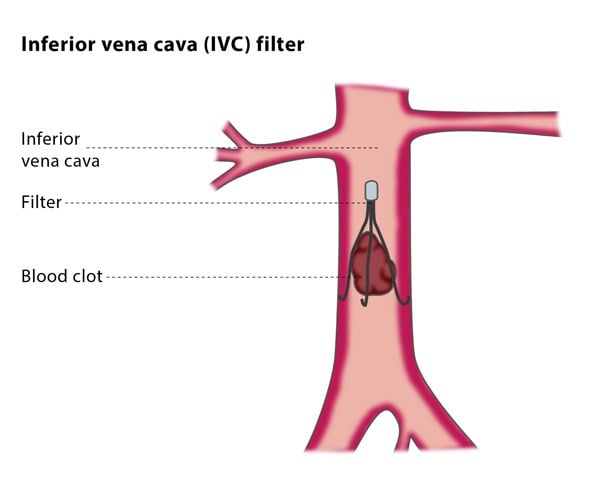
Inferior Vena Cava Ivc Filters Placement And Retrieval Cirse
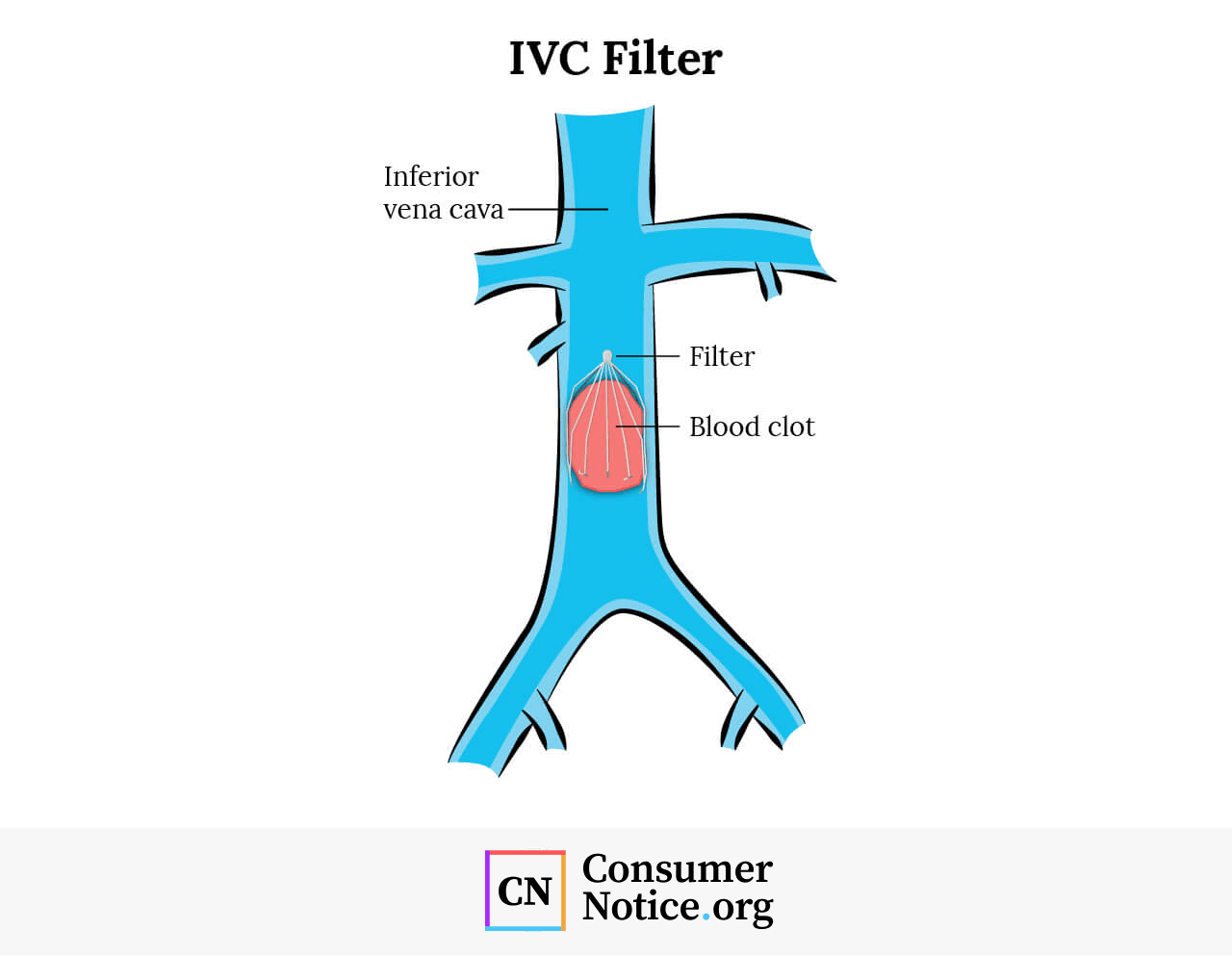
Inferior Vena Cava Ivc Filter Placement Removal Complications
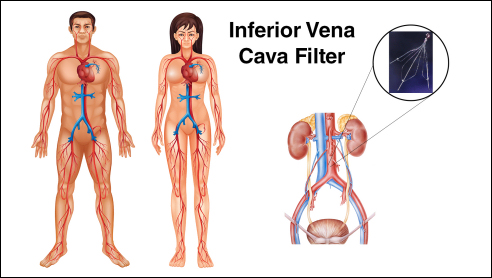
Ivc Filters Lieff Cabraser
Ivc Filter Removal La Imaging Interventional Consultants
About Your Inferior Vena Cava Ivc Filter Placement Memorial Sloan Kettering Cancer Center
Ivc Filter Varicose Veins Vascular Surgeon Stroke Dvt Leg Gangrene Cancer

Ivc Filter Facts Brian Eberstein Bad Drug Dallas Lawyer
Inferior Vena Cava Filters Center For Vein Care

Coding Guide For Vena Cava Filter Cpt Code 37191 37192 And 37193

Inferior Vena Cava Filter Wikiwand

How To Place An Ivc Filter Youtube
Inferior Vena Cava Ivc Filter Management Mount Sinai New York
Inferior Vena Cava Filter Placement And Removal
Inferior Vena Cava Filter Ivc Filter Vein Specialists Of The Carolinas
Ivc Filter Jugular Route Pulmonary Embolism Prevention Dvt Complication Prevention By Dr Shailes Youtube

Inferior Vena Cava Filter Placement And Removal Ria Endovascular
Ivc Filter Varicose Veins Vascular Surgeon Stroke Dvt Leg Gangrene Cancer

Components Of Some Inferior Vena Cava Filter Include The Tip With A Download Scientific Diagram
Vasculardoctorindia Com

Post a Comment for "How To Insert An Ivc Filter"